
Alaska Parenting Plans (Custody Agreements)
Parenting plans organize the details of custody arrangements for separated or divorced parents.
Parents in Alaska are required to submit a parenting plan to the court. You and the other parent can work together to create a parenting plan or each submit your own proposal to the judge.
Required forms
Alaska lets parents choose their parenting plan template.
You can use the Custody X Change parenting plan, which offers over 140 custody provisions.
Try this with Custody X Change.
Or you can use the state's parenting plan template, which has more limited options.
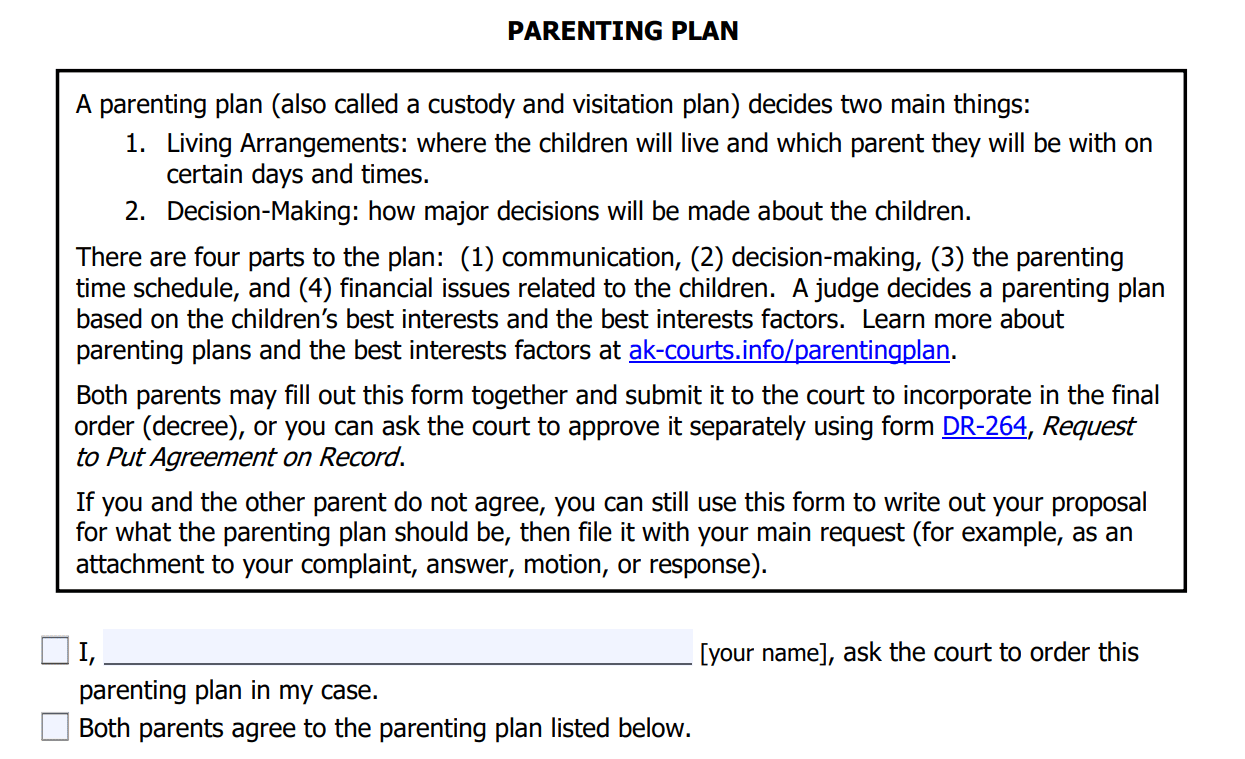
Either way, attach your plan to a Best Interests Affidavit, where you'll explain why the terms are good for your child.
Required topics
At minimum, a parenting plan must include the following.
Physical custody
Physical custody sets out when the child is with each parent.
Shared physical custody is most common. Both parents have at least 110 overnights per year.
Primary physical custody means the child spends at least 256 overnights with one parent and has fewer than 110 overnights with the other parent. There can be supervised visits if the nonprimary parent isn't ready to have the child on their own.
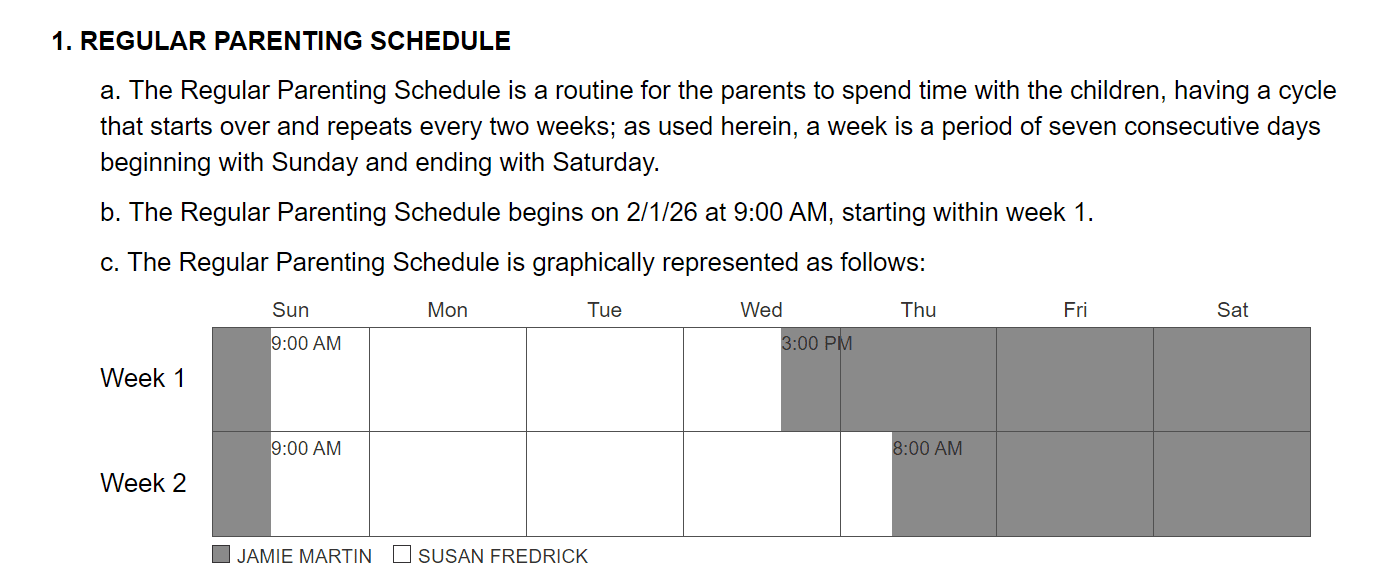
Include a parenting time schedule to set exchange days and times. Include holidays and special occasions as well. If you make your schedule with Custody X Change, you'll get a visual schedule in your plan, plus a calendar you can use day-to-day.
 Try this with Custody X Change.
Also, cover how the child will get to each parent's home. For example, you might say the parent who already has the child is responsible for getting them to the other parent. If you and the other parent often butt heads, consider exchanging the child in a public space like a grocery store parking lot. You might even require that a third party be present (called supervised exchanges).
Be aware that the type of physical custody you have influences how much child support you pay or receive.
Legal custody
Legal custody gives a parent the right to make decisions for their child.
Joint legal custody is most common, with both parents having a say in the child's schooling, health care, religion and other important matters.
Sole legal custody gives one parent the right to make all child-related decisions. It's typically only awarded when parents are unable to communicate about the child, or when one parent is unfit due to severe mental illness, substance abuse or domestic violence issues.
In either case, both parents have the right to access information about the child (e.g., school and medical records) and make emergency decisions. When a child visits a parent, that parent can make day-to-day decisions for them, like what to wear and what to eat.
Communication
Be clear about how you will discuss parenting matters. You might allow phone calls or stick to communicating through a co-parenting app.
Also, include how parents can stay in touch with the child while the child is with the other parent. You could even require parents to let one another know where your child is during visits.
Financial decisions
Financial topics you might include:
- Child support (if you've reached an agreement)
- Who gets to collect the Permanent Fund Dividend for the child
- Who can claim the child on taxes
- Who should pay for extracurriculars
Optional topics
You'll want to be as clear as possible with your plan. Adding additional topics can help. Make sure to leave flexibility where possible to allow for unforeseen circumstances.
Health insurance
Parents must secure health insurance coverage for their child.
Specify who will provide the child's health insurance (or if the child will have state health insurance) and how you will split uninsured costs.
Dispute resolution
When you have disagreements, negotiating is recommended over going back to court.
State what alternative dispute resolution method you'll use: mediation, parenting coordination or something else.
Relocation
Alaska law doesn't specify how much notice a parent must give before a proposed move. Set your own rules for giving notice, how far you can move, and how you will handle adjusting the parenting time schedule.
If you don't set rules and you disagree on a move, the court will consider whether the move is for good reason (e.g., better employment) and the consequences for the child.
Travel
Since Alaska has such a large land mass and is disconnected from other states, it's important to specify how you'll handle traveling with the child.
You might set limits on how far parents can travel with the child or require a certain amount of notice before taking the child out of the state or country. Additionally, you may want to require the traveling parent to provide an itinerary and contact information for where the child will stay.
The easiest way to make a parenting plan
When you're writing a parenting plan, it's critical you use airtight language that leaves no room for interpretation.
If you hire a lawyer, they'll write up the plan and ensure it meets the court's requirements.
If you write your own plan, use technology to take guesswork out of the equation. The parenting plan template in the Custody X Change online app walks you through each step.
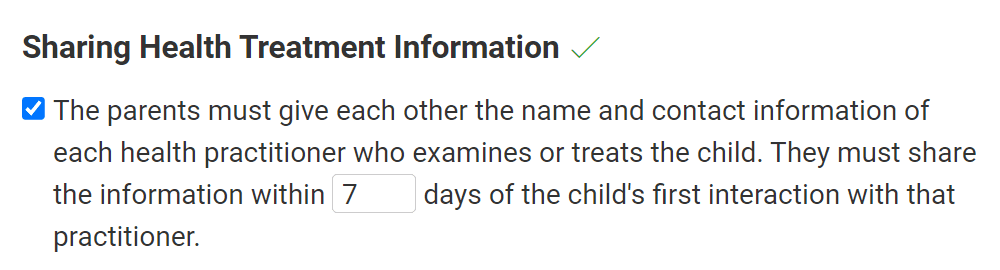
The result is a professional document that demonstrates your competence as a parent from the first glance.
The easiest and most reliable way to make a parenting plan is with Custody X Change.